- New

 Payment suited to your country
Delivery in Poland: BLIK or PKO bank transfer. Abroad: Revolut or SEPA transfer in EUR. Full details after placing your order.
 Shipped from Poland
InPost parcel lockers in Poland approx. 72 hours from payment. International letter: Europe approx. 21 days, outside the EU approx. 30 days.
 Any questions?
Write to us via the contact form – please quote your order number.
WARNING: Chemical reagent intended solely for laboratory, research and analytical purposes. NOT FOR HUMAN OR ANIMAL CONSUMPTION. It is not a medicinal product, dietary supplement or food.
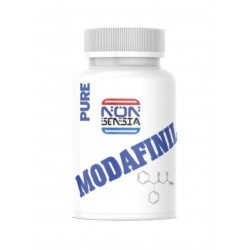
MODANA (also known as Didesoxymodafinil) is a research compound described as a structural analogue of modafinil. The “didesoxy” designation refers to a structural modification involving the removal of oxygen-containing groups present in the modafinil molecule — in particular a modification affecting the sulfinyl/amide portion of the diphenylmethyl core. The compound belongs to the broadly defined family of sulfur-containing diphenylmethyl (benzhydryl) derivatives, which includes modafinil (a sulfinyl derivative) and its related research analogues.
As a niche, rarely encountered research reagent, MODANA has only a limited set of publicly confirmed physicochemical data. The table below deliberately marks the fields for which no unambiguously verified values exist — the aim is to avoid presenting uncertain analytical data as certain.
| Systematic name | no confirmed public data |
| Synonyms | MODANA, Didesoxymodafinil; modafinil analogue |
| CAS number | no confirmed public data |
| Molecular formula | no confirmed public data |
| Molar mass | no confirmed public data |
| Appearance | no confirmed public data (typically a powder / crystalline solid) |
| Solubility | no confirmed public data |
| Purity | as per the specification of the given batch (Certificate of Analysis) |
MODANA is classed among compounds derived structurally from modafinil — a molecule based on a diphenylmethyl core. As an analogue differing from the parent structure by the removal of oxygen-containing groups, MODANA is of interest in the context of structure–activity relationship (SAR) studies within this family of compounds. Data on this particular analogue in widely available chemical databases are, however, limited.
The product is offered as a compound for advanced laboratory research, intended for chemical analysis, reference work, validation of analytical methods and in vitro experiments carried out by qualified personnel under laboratory conditions. Given the limited amount of confirmed public data and the absence of a full physicochemical characterisation in international databases, independent verification of the identity and purity of the material by instrumental methods (NMR, LC-MS, HPLC) on the basis of the Certificate of Analysis provided for the specific batch is strongly recommended.
The reagent is not intended for diagnostic, therapeutic or consumer use. Responsibility for the lawful and safe use of the substance rests with the purchaser acting as a research entity.
Store in a tightly closed container in a dry, cool place, away from light and moisture, in line with good laboratory practice.
MODANA ≥99% — chemical reagent for laboratory, research and analytical use. Not for human or animal consumption.
Modafinil ≥99% — chemical reagent for laboratory, research and analytical use. Not for human or animal consumption.
FLModafinil ≥99% — chemical reagent for laboratory, research and analytical use. Not for human or animal consumption.
Paracetamol ≥99% — chemical reagent for laboratory, research and analytical use. Not for human or animal consumption.
Mebicar ≥99% — chemical reagent for laboratory, research and analytical use. Not for human or animal consumption.
Magnesium L-threonate ≥99% — chemical reagent for laboratory, research and analytical use. Not for human or animal consumption.
Pregabalin ≥99% — chemical reagent for laboratory, research and analytical use. Not for human or animal consumption.
Olivetol ≥99% — chemical reagent for laboratory, research and analytical use. Not for human or animal consumption.
Caffeine ≥99% — chemical reagent for laboratory, research and analytical use. Not for human or animal consumption.
Alpha-GPC ≥99% — chemical reagent for laboratory, research and analytical use. Not for human or animal consumption.
5-HTP ≥99% — chemical reagent for laboratory, research and analytical use. Not for human or animal consumption.
Tadalafil ≥99% — chemical reagent for laboratory, research and analytical use. Not for human or animal consumption.
Taurine ≥99% — chemical reagent for laboratory, research and analytical use. Not for human or animal consumption.
SLU-PP-332 / SLU-SENSIA — research solution 18 mg in 18 ml DMSO (1.0 mg/ml), CAS 303760-60-3, C18H14N2O2, base substance purity ≥ 98%. For laboratory, research and analytical use only. Not for human or animal consumption.
Hemantane ≥99% — chemical reagent for laboratory, research and analytical use. Not for human or animal consumption.
Chlodantane (Chlodantan) ≥99% — chemical reagent for laboratory, research and analytical use. Not for human or animal consumption.
Sunifiram ≥99% — chemical reagent for laboratory, research and analytical use. Not for human or animal consumption.
FLModafinil ≥99% — chemical reagent for laboratory, research and analytical use. Not for human or animal consumption.
Sildenafil ≥99% — chemical reagent for laboratory, research and analytical use. Not for human or animal consumption.