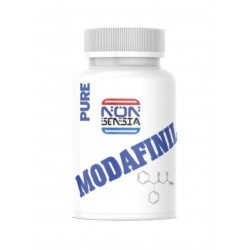
- New

 Payment suited to your country
Delivery in Poland: BLIK or PKO bank transfer. Abroad: Revolut or SEPA transfer in EUR. Full details after placing your order.
 Shipped from Poland
InPost parcel lockers in Poland approx. 72 hours from payment. International letter: Europe approx. 21 days, outside the EU approx. 30 days.
 Any questions?
Write to us via the contact form – please quote your order number.
WARNING: Chemical reagent intended solely for laboratory, research and analytical purposes. NOT FOR HUMAN OR ANIMAL CONSUMPTION. It is not a medicinal product, dietary supplement or food.
Tianeptine is an organic compound with a complex tricyclic scaffold, a dibenzothiazepine derivative bearing a heptanoic-acid side chain. In its free-acid form it is a solid of moderate aqueous solubility; the more commonly traded form is the sodium salt, which dissolves better in water although, according to the literature, it is somewhat less stable than the free acid. The molecule contains a sulfur atom within a sulfone (dioxide) bridge and a chlorine atom on the aromatic ring, making it an interesting subject for spectral and chromatographic study. As a rarer research reagent, tianeptine requires careful analytical characterisation – the data below refer to the free-acid form.
| IUPAC Name | 7-[(3-chloro-6-methyl-5,5-dioxido-6,11-dihydrodibenzo[c,f][1,2]thiazepin-11-yl)amino]heptanoic acid |
| Synonyms | Tianeptine (free acid); sodium form: tianeptine sodium |
| CAS Number | 66981-73-5 (free acid); sodium-salt CAS – no reliable data in this description |
| Molecular Formula | C21H25ClN2O4S (free acid) |
| Molar Mass | 436.95 g/mol (free acid) |
| Appearance | white to off-white crystalline powder |
| Solubility | free acid: moderate in water, better in organic solvents; sodium salt: good in water |
| Melting Point | approx. 129–131 °C (free acid) |
| Boiling Point | no reliable data / under review |
| Purity | ≥99% |
Tianeptine is studied in neuropharmacology as a compound with an atypical action profile on the glutamatergic and serotonergic systems that departs from classical tricyclic modulators. In the laboratory it is used chiefly as an analytical standard and reference compound in in-vitro receptor studies, metabolism analysis and the validation of assay methods – HPLC, LC-MS/MS and mass spectrometry. The presence of chlorine and sulfur atoms makes it a convenient model for ion-fragmentation studies and isotopic-pattern identification. It is also used in comparative investigations of the stability of salt forms versus the free acid and in the preparation of reference materials for quality control. This product is intended strictly for research use and has no diagnostic or therapeutic application.
Store in a tightly closed container in a dry, cool place, away from light and moisture, in line with good laboratory practice.
Tianeptine (acid) ≥99% — chemical reagent for laboratory, research and analytical use. Not for human or animal consumption.
SLU-PP-332 / SLU-SENSIA — research solution 18 mg in 18 ml DMSO (1.0 mg/ml), CAS 303760-60-3, C18H14N2O2, base substance purity ≥ 98%. For laboratory, research and analytical use only. Not for human or animal consumption.
L-DOPA (Levodopa) ≥99% — chemical reagent for laboratory, research and analytical use. Not for human or animal consumption.
Bromantan ≥99% — chemical reagent for laboratory, research and analytical use. Not for human or animal consumption.
Modafinil ≥99% — chemical reagent for laboratory, research and analytical use. Not for human or animal consumption.
MODANA ≥99% — chemical reagent for laboratory, research and analytical use. Not for human or animal consumption.
Hemantane ≥99% — chemical reagent for laboratory, research and analytical use. Not for human or animal consumption.
Sildenafil ≥99% — chemical reagent for laboratory, research and analytical use. Not for human or animal consumption.
Alpha-GPC ≥99% — chemical reagent for laboratory, research and analytical use. Not for human or animal consumption.
Taurine ≥99% — chemical reagent for laboratory, research and analytical use. Not for human or animal consumption.
Melatonin ≥99% — chemical reagent for laboratory, research and analytical use. Not for human or animal consumption.
Olivetol ≥99% — chemical reagent for laboratory, research and analytical use. Not for human or animal consumption.
5-HTP ≥99% — chemical reagent for laboratory, research and analytical use. Not for human or animal consumption.
FLModafinil ≥99% — chemical reagent for laboratory, research and analytical use. Not for human or animal consumption.
Caffeine ≥99% — chemical reagent for laboratory, research and analytical use. Not for human or animal consumption.
Tadalafil ≥99% — chemical reagent for laboratory, research and analytical use. Not for human or animal consumption.
Sunifiram ≥99% — chemical reagent for laboratory, research and analytical use. Not for human or animal consumption.